Reed shores · western lake
Dümmer See, where the dike is a hide
Smaller than Steinhuder Meer, wetter in character, and more willing to disappear into reed. Come for migration and the long horizontal of reconstructed dams — not for a second swimming postcard.
A lake rebuilt as a wetland machine
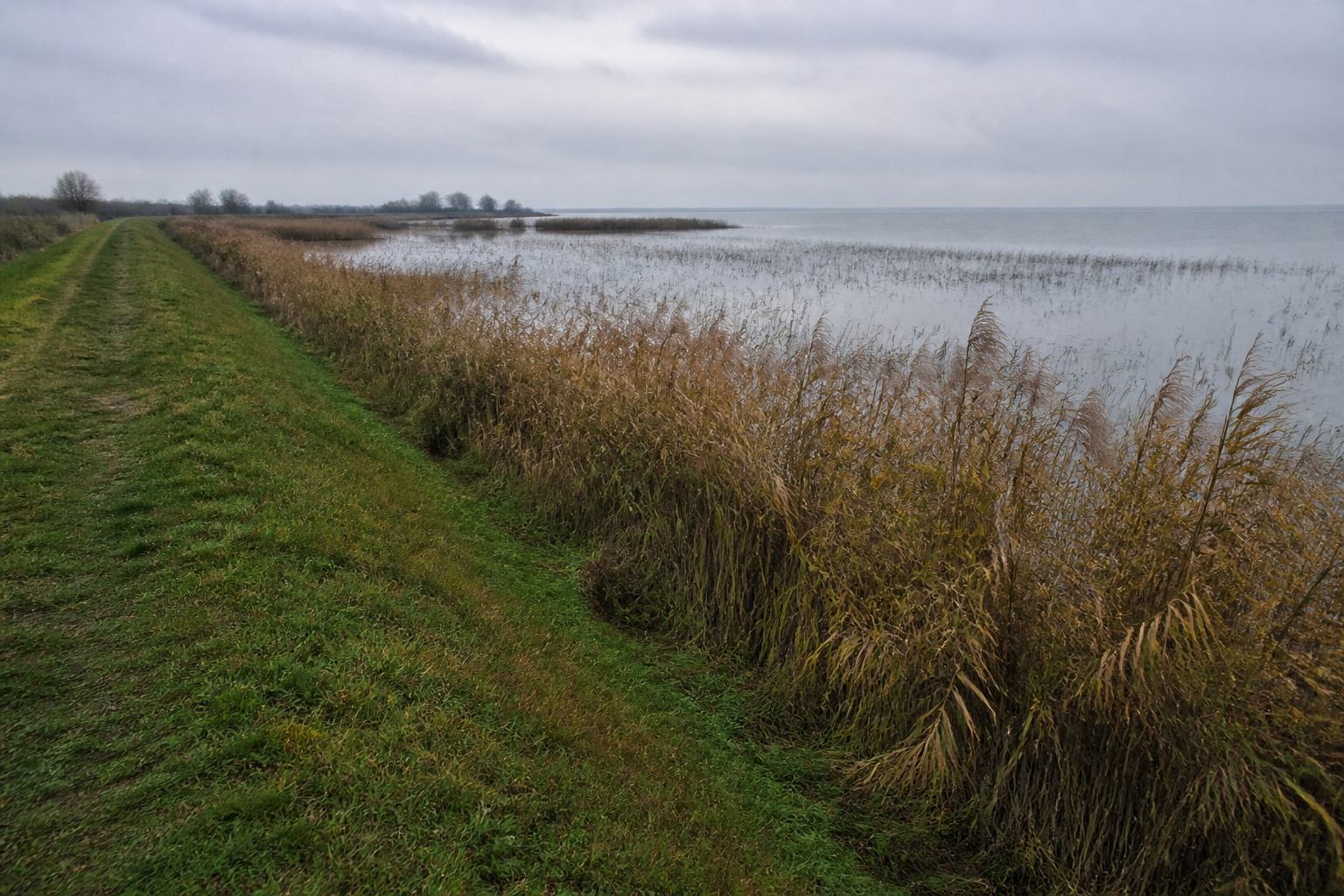
Dümmer See has a public history of flooding, dredging argument and dike reconstruction. What you ride today is not a pristine scoop in the land; it is a negotiated water body with pumping, nature-conservation targets and villages — Lembruch, Hüde, the Damme side — that still farm the wet. The visual gift of that negotiation is the reed: a bronze screen in September, a bird factory in spring, a wind instrument all year.
If Steinhuder Meer teaches fetch and bathing edges, Dümmer teaches patience. Paths sit on the dam. The interesting life is off the path, which is exactly why you stay on it. Crossing into the reed for a closer heron is how hides lose their meaning. vantacd’s rule is the same as a good hide: distance is the method.
How to enter without a car narrative
Regional trains on the Diepholz corridor, then a short bus or a pre-planned bicycle from a junction town, keep the day aligned with the landscape. The dike loop is shorter than the Steinhude circuit and more exposed to farm traffic at gates. Surfaces mix packed gravel and asphalt. After rain the clay shoulders are not a cycle track. Pair this lake with the Weser flood meadows only if you have legs for two wind days; they look neighbouring on a wall map and feel like two weathers.
Steinhuder Meer and Dümmer, side by side
Steinhuder Meer
- Larger plate of open water, stronger bathing culture.
- 32 km dike circuit, villages as regular punctuation.
- Moor to the north-east as a second, wetter room.
Dümmer See
- Stronger reed and pasture, weaker postcard swim.
- Shorter dam rides, more hide logic.
- Migration days that can empty a car park at dawn and refill it with tripods.
Numbers lie if you only compare square kilometres. The useful comparison is acoustic: Steinhude still hums with shore life; Dümmer, on a bronze September morning, can be mostly wingbeats. See the wetland bird notes before you time a visit for cranes.
Reed, wind and the evening route
The last good hour is not sunset as a postcard. It is the moment the dam path empties and the reed goes black while the water still holds leftover sky. That is when a short walk beats another café. If you are threading the five-day itinerary, keep Dümmer for the final night so the trip ends in reed rather than in a town square.
Carry binoculars. Do not playback calls. Do not drone the roost. The ethical standard is the same as the landscape: low, quiet, horizontal.